
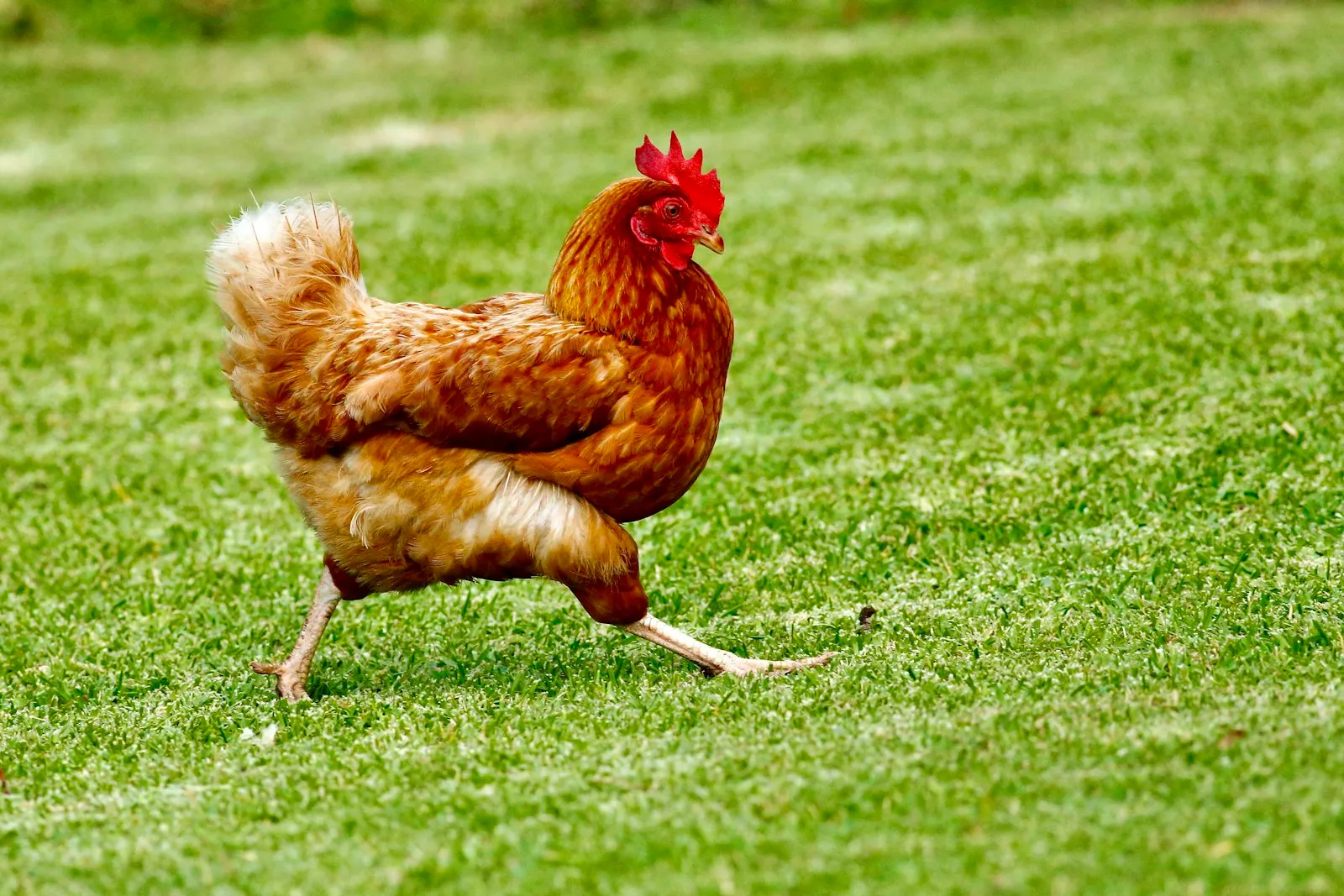
Yucca schidigera in poultry: gut, litter and immunity
In broilers and laying hens alike, yucca saponins are being studied on three fronts: the mucosa in the face of coccidiosis, feed efficiency, and the ammonia released from the litter.
Three challenges in poultry farming
Coccidiosis
The leading digestive disease in broilers. Vaccination and coccidiostats keep the disease in check, but the vaccine reaction itself weighs on performance during the first weeks.
Feed efficiency
Feed accounts for most of the cost of production. Every point of feed conversion ratio gained is reflected directly in the farm’s margin.
Ammonia and litter
Produced as droppings break down, ammonia irritates the respiratory tract, worsens working conditions and promotes foot lesions on wet litter.
What each trial measured
Three broiler trials, seven indicators. Each cell shows the result obtained with yucca; click on it to display the values, the statistical significance and the trial conditions.
2007Demir
2000Sun
2018
Weight gain
At 42 days, birds vaccinated and supplemented at 100 mg/kg, compared with birds vaccinated alone. The gap widens after 21 days.
600 male Ross 308 broilers, 5 treatments of 4 replicates of 30 birds, 1 to 42 days. Yucca extract at 100 mg/kg (6.5% saponins), in birds vaccinated against coccidiosis or receiving a coccidiostat.
Weight gain
From 8 to 42 days at 60 ppm: weight gain is not significantly altered, nor is feed intake.
408 male Ross broilers, 8 to 42 days, maize-soya diet. Yucca extract at 60, 120 and 180 ppm, with or without zinc bacitracin (50 ppm).
Weight gain
In the finisher phase (29-42 days) at 100 mg/kg, with the European production index also improved. No difference in the grower phase (15-28 days).
128 Arbor Acres broilers, 4 replicates of 8 birds per treatment, 15 to 42 days. Yucca extract at 0, 100, 200 or 300 mg/kg (more than 7% saponins); vaccination against Newcastle disease at 1 and 7 days.
Feed conversion ratio
At 42 days: best FCR of the five treatments in the trial, ahead of the coccidiostat alone (1.530) and the control (1.561).
600 male Ross 308 broilers, 5 treatments of 4 replicates of 30 birds, 1 to 42 days. Yucca extract at 100 mg/kg (6.5% saponins), in birds vaccinated against coccidiosis or receiving a coccidiostat.
Feed conversion ratio
From 8 to 42 days, at both 60 and 120 ppm. Combining it with zinc bacitracin brings no further improvement.
408 male Ross broilers, 8 to 42 days, maize-soya diet. Yucca extract at 60, 120 and 180 ppm, with or without zinc bacitracin (50 ppm).
Duodenal villi
Height measured at 6 days. The villus / crypt ratio rises from 5.79 to 6.57 (+13.5%), a sign of better-preserved mucosa.
600 male Ross 308 broilers, 5 treatments of 4 replicates of 30 birds, 1 to 42 days. Yucca extract at 100 mg/kg (6.5% saponins), in birds vaccinated against coccidiosis or receiving a coccidiostat.
Abdominal fat
In g per 100 g of body weight, at 60 ppm of extract.
408 male Ross broilers, 8 to 42 days, maize-soya diet. Yucca extract at 60, 120 and 180 ppm, with or without zinc bacitracin (50 ppm).
Litter pH
At 120 ppm (5.72 at 180 ppm). More acidic litter slows down ammonia production.
408 male Ross broilers, 8 to 42 days, maize-soya diet. Yucca extract at 60, 120 and 180 ppm, with or without zinc bacitracin (50 ppm).
Newcastle antibodies
At 100 mg/kg, in both the grower and finisher phases: better response to vaccination against Newcastle disease.
128 Arbor Acres broilers, 4 replicates of 8 birds per treatment, 15 to 42 days. Yucca extract at 0, 100, 200 or 300 mg/kg (more than 7% saponins); vaccination against Newcastle disease at 1 and 7 days.
Serum cytokines
Interferon gamma in the finisher phase at 100 mg/kg; IL-6 rises from 14.58 to 15.52 pg/mL (p = 0.004). At doses of 200 and 300 mg/kg, IL-6 falls in the grower phase and IL-4 in the finisher phase.
128 Arbor Acres broilers, 4 replicates of 8 birds per treatment, 15 to 42 days. Yucca extract at 0, 100, 200 or 300 mg/kg (more than 7% saponins); vaccination against Newcastle disease at 1 and 7 days.
Coccidiosis: yucca as a partner to vaccination
600 Ross 308 broilers vaccinated against coccidiosis or treated with a coccidiostat, with or without 100 mg/kg of yucca extract. How the trial unfolded, from placement to the outcome at 42 days.
Vaccine and yucca from the start
Birds vaccinated against four Eimeria species; the extract is included at 100 mg/kg of feed throughout the rearing period.
Better-preserved mucosa
Duodenal villi +9% and villus / crypt ratio +13.5% compared with birds vaccinated alone.
Performance diverges
Yucca mitigates the performance losses linked to the vaccine reaction: the authors describe a vaccine × yucca synergy.
Best outcome in the trial
Weight gain +10.3% and feed conversion ratio −12.9% compared with vaccine alone; best FCR of the five treatments.
The fifth treatment (coccidiostat + yucca) does not improve the feed conversion ratio at 42 days. Gain in g per bird; FCR in kg of feed per kg of gain.
Most effects fall between 60 and 125 mg/kg
Extract doses tested in the trials cited, in mg per kg of feed (1 mg/kg = 1 ppm). The solid dot marks the most favourable dose in each trial. The extracts used contain from 6.5 to more than 7% saponins.
Above 100 mg/kg, Sun et al. (2018) observe no additional benefit and report a less favourable immune response at doses of 200 and 300 mg/kg. The dose cannot be transferred from one product to another: it depends on the saponin content of the extract.
From the gut to the air in the poultry house
Saponins act first in the digestive tract, then their effects extend to the droppings, the litter and the environment inside the house.
A direct action on coccidia[1][4]
Saponins bind to cholesterol in the protozoan membrane, which impairs its integrity and leads to lysis of the parasite. In vaccinated broilers, yucca proved complementary to vaccination rather than competing with it.
Preserved villi[1][8]
From 6 days of age, duodenal villi are taller in supplemented birds. As surfactants, saponins also facilitate fat emulsification and nutrient absorption.
A stronger vaccine response[2]
At 100 mg/kg, yucca increases antibodies against Newcastle disease and modulates cytokines (IFN-γ, IL-6). Saponins and polyphenols, including resveratrol, are thought to contribute to this effect, which is strongly dose-dependent.
Less ammonia in the poultry house[3][5][11]
Yucca inhibits urease and binds ammonia. More acidic litter limits the volatilisation of ammonia nitrogen; in laying hens, combined with frequent manure removal, it reduces ammonia generation and emission.
Other published studies
Laying hens
100 ppm of yucca, combined with manure removal every 1 to 2 days, reduces ammonia generation and emission.
Improved egg weight and feed efficiency, lower serum and yolk cholesterol, reduced proliferation of Escherichia coli.
Improved performance, blood profile and antioxidant enzyme activity.
Litter and ammonia
At 125 mg/kg, yucca helps maintain litter quality in broilers, with no adverse effect on performance.
Review: yucca can mitigate ammonia emissions from manure and support poultry health and production.
Combinations
At 250 mg/kg, during a mixed Eimeria challenge, immunomodulatory effects and regeneration of the intestinal mucosa.
The combination of quillaja and yucca saponins was evaluated for its effects on performance, digestibility and ileal morphology in broilers.
- Small-scale trials. The Alfaro trial has only 4 replicates per treatment, as the authors themselves point out; the Sun trial covers 32 birds per treatment, in cages and at low stocking density, conditions more favourable than floor rearing.
- A dose-dependent effect. The benefit does not increase with the dose: in two trials, the intermediate or the lowest dose is the best, and high doses can be detrimental.
- Sources of varying standing. The work of Demir and Karaalp is known through their presentation at the 12th European Symposium on Poultry Nutrition, as reported by Feedstuffs; the laying hen trials are cited from a literature review.
Yucca Schidigera, powder or liquid
In poultry, the powder form is incorporated into compound feed; the liquid form can be supplied via drinking water. Both aim for a consistent active content, a prerequisite for achieving the doses studied under farm conditions.
Yucca in poultry farming
Does yucca replace a coccidiostat?
No. In the Alfaro trial, yucca gives its best results as a complement to vaccination against coccidiosis; added to the coccidiostat, it does not improve the feed conversion ratio at 42 days. It is a tool that supports control programmes, not an anticoccidial.
At what dose should it be included?
Published effects mostly fall between 60 and 125 mg of extract per kg of feed, with an optimum around 100 mg/kg in several trials. The dose depends on the saponin content of the product: Actifeed sets out the recommendations for its range in the technical data sheet.
Can it replace ventilation for managing ammonia?
No. Yucca acts on ammonia production, but ventilation and litter management remain essential. In laying hens, the published effect is obtained in combination with frequent manure removal.
Should it be supplied in the feed or in the water?
Both routes exist: the powder is incorporated into compound feed, while the liquid can be supplied via drinking water. The trials cited here all use supplementation via the feed.
Scientific literature
- Alfaro D.M., Silva A.V.F., Borges S.A., Maiorka F.A., Vargas S., Santin E. (2007). Use of Yucca schidigera extract in broiler diets and its effects on performance results obtained with different coccidiosis control methods. Journal of Applied Poultry Research, 16(2), 248-254.
- Sun D.-S., Shi B.-L., Tong M.-M., Yan S.-M. (2018). Improved performance and immunological responses as a result of dietary Yucca schidigera extract supplementation in broilers. Italian Journal of Animal Science, 17(2), 511-517. doi:10.1080/1828051X.2017.1358593
- Demir E., Karaalp M. (2000). Effect of Yucca schidigera extract, with or without zinc bacitracin, in broiler chickens. 12th European Symposium on Poultry Nutrition, Veldhoven. Reported by Lundeen T., “Yucca extract improves feed efficiency, decreases abdominal fat in broilers”, Feedstuffs, 72(33), 7 August 2000.
- Oelschlager M.L. et al. (2019). Effects of Yucca schidigera-derived saponin supplementation during a mixed Eimeria challenge in broilers. Poultry Science, 98(8).
- Chepete H.J. et al. (2012). Ammonia emission and performance of laying hens as affected by different dosages of Yucca schidigera in the diet. Journal of Applied Poultry Research, 21(3).
- Wang J.P., Kim I.H. (2011). Effect of caprylic acid and Yucca schidigera extract on production performance, egg quality, blood characteristics, and excreta microflora in laying hens. British Poultry Science, 52(6).
- Alagawany M. et al. (2016). Productive performance, egg quality, blood constituents, immune functions, and antioxidant parameters in laying hens fed diets with different levels of Yucca schidigera extract. Environmental Science and Pollution Research, 23(7).
- Bafundo K.W., Männer K., Duerr I. (2021). The combination of quillaja and yucca saponins in broilers: effects on performance, nutrient digestibility and ileal morphometrics. British Poultry Science, 62(4).
- Sahoo S.P. et al. (2015). Evaluation of Yucca schidigera extract as feed additive on performance of broiler chicks in winter season. Veterinary World, 8(4).
- Saeed M. et al. (2018). Yucca schidigera can mitigate ammonia emissions from manure and promote poultry health and production. Environmental Science and Pollution Research, 25(35).
- Cheeke P.R. (2000). Actual and potential applications of Yucca schidigera and Quillaja saponaria saponins in human and animal nutrition. Journal of Animal Science, 77(E-Suppl.), 1-10.